
The Best Fluffy Pancakes recipe you will fall in love with. Full of tips and tricks to help you make the best pancakes.


Table of Contents
Introduction
There’s a secret ingredient hiding in plain sight, one that can transform your cooking with its incredible ability to create the crispiest, most flavorful French fries, sear steaks to perfection, and roast vegetables with a rich, savory depth that you just can’t get from ordinary oils. This magic potion is beef tallow, and the best part is that it’s not a secret at all—it’s a timeless, traditional fat that our grandparents knew and loved. In fact, if you’ve ever wondered why McDonald’s fries were so irresistibly good back in the day, it’s because they were cooked in beef tallow until the 1990s! What makes this recipe truly special for your home kitchen is its stunning simplicity. With just one single ingredient and a little patience, you can create a versatile, high-quality cooking fat that puts you in control of what’s in your food. Unlike our popular guide for rendering duck fat, which is a fantastic but more specialized ingredient, beef tallow is incredibly versatile and can be used for everything from frying to baking. This process is a fantastic, hands-off project that fills your home with a comforting, savory aroma and yields a product that will elevate your cooking for months to come. So, let’s unlock the magic of this single-ingredient powerhouse and turn simple beef fat into pure culinary gold!
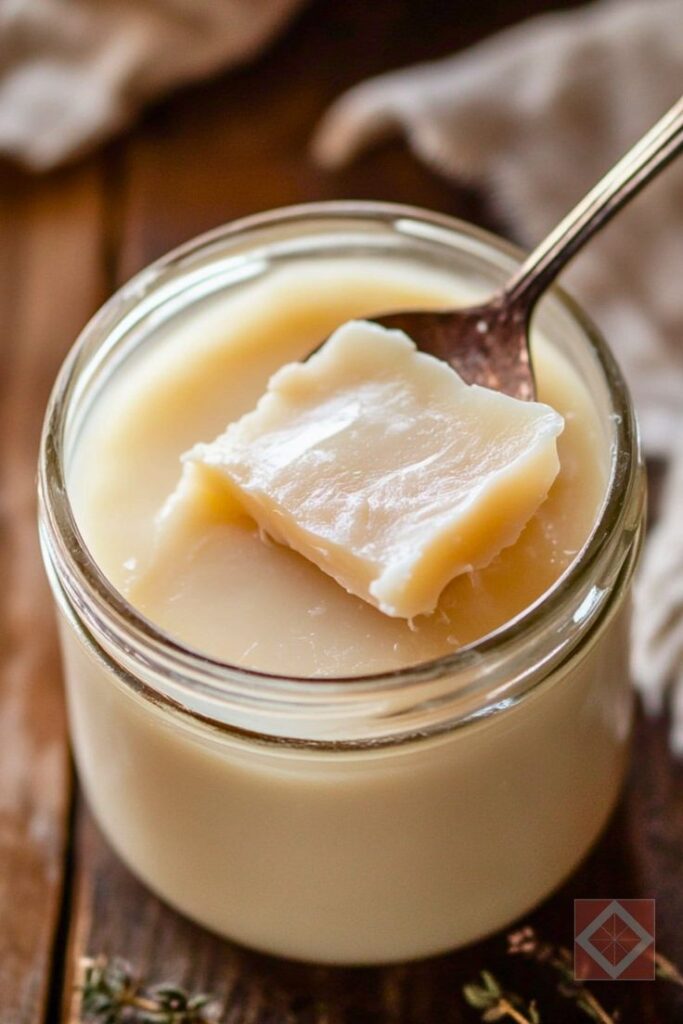
What is Beef Tallow?
So, what in the world is “beef tallow,” you ask? Is it just a fancy name for grease? A historical curiosity? Well, my friend, it’s the ultimate kitchen staple making a major comeback! Think of tallow as the pure, rendered essence of beef flavor, captured in a solid, shelf-stable form. But why call it “tallow”? The name itself has old-world roots, simply referring to rendered animal fat. It’s what happens when you take the hard fat from a cow (often from around the kidneys, called suet) and gently melt it down until all the impurities are removed, leaving behind a clean, pure fat . There’s a classic saying that ‘the way to a person’s heart is through their stomach,’ and a jar of homemade, golden tallow is a direct route to achieving deeply satisfying, heart-warming meals. It’s the simple, humble ingredient that does all the heavy lifting. Ready to become a rendering rockstar?
Why You’ll Love This Beef Tallow Recipe
You are going to be amazed by how much you can achieve with this one simple recipe. First, the absolute highlight is the unbeatable quality and purity. When you make tallow at home, you know exactly what you’re getting: 100% pure beef fat with no additives, preservatives, or mystery ingredients. It’s a return to real, whole-food cooking that gives you complete control over what you feed your family.
Second, let’s talk about the incredible cost-saving magic. If you ever buy a large cut of beef like a brisket, you can collect the fatty trimmings that you’d normally discard and transform them into a valuable kitchen staple . Alternatively, buying beef fat from a local butcher is incredibly inexpensive, often just a few dollars per pound. This turns what would be waste into a high-quality product, making it an incredibly economical and sustainable choice.
Finally, the spectacular cooking performance is what will make you a lifelong convert. Beef tallow has a very high smoke point of nearly 480°F (250°C), which makes it perfect for high-heat tasks like deep-frying, searing steaks, and roasting potatoes without burning or smoking . It adds a subtle, rich beef flavor that enhances everything it touches. If you enjoy the versatile, from-scratch satisfaction of making your own chicken stock, you’ll adore the process of rendering tallow—it’s another fantastic way to utilize every part of the animal and minimize waste. So, grab that stockpot and get ready to fall in love with your new secret weapon: homemade beef tallow!
How to Make Beef Tallow
Quick Overview
Making beef tallow is an easy, hands-off process that requires patience more than skill. The method involves slowly and gently melting beef fat over low heat until it turns into a clear liquid, which is then strained to remove any solid impurities. The result is a pure, stable fat that is liquid when hot and solidifies into a beautiful white or pale-yellow solid when cool. The active prep time is just 20 minutes, with a total cook time of 3 to 5 hours for the rendering process.
Key Ingredients for Beef Tallow
- 3-5 pounds raw beef fat (suet) . Look for hard, white fat from around the cow’s kidneys and loins for the highest yield and purest flavor. You can source this from a local butcher or save trimmings from a brisket.
Essential Equipment
- A large, heavy-bottomed pot (like a Dutch oven), slow cooker, or crockpot .
- A fine-mesh strainer or cheesecloth .
- A funnel (optional, but very helpful) .
- Clean glass jars or airtight containers for storage (Mason jars work perfectly) .
Step-by-Step Instructions:
- Prepare the Fat: Start by cutting the beef fat into small, uniform pieces, about 1-inch cubes. If the fat is partially frozen, it will be easier to chop. Pro Tip: The smaller you cut the pieces, the more surface area is exposed, and the faster and more efficiently the fat will render .
- Begin the Rendering Process: Place all the chopped fat into your large pot or slow cooker. Turn the heat to the lowest possible setting. If using a slow cooker, the “low” setting is ideal. The key to clean, white tallow is low and slow heat; high heat can burn the fat, giving it a darker color and a funkier, unpleasant flavor .
- Simmer Slowly: Allow the fat to melt slowly. You will notice it beginning to liquefy and bubble gently. There should be small bubbles, but never a rolling boil . Stir the mixture every 30 minutes or so with a wooden spatula, scraping the bottom to prevent any pieces from sticking and burning.
- Identify the Finish Point: The tallow is finished rendering when the solid pieces of fat (now called “cracklings”) have shrunk significantly, turned a light golden brown, and become crispy. They will float in the clear, liquid fat. You should not see any more white or solid pieces of fat . This process can take anywhere from 3 to 5 hours.
- Strain the Liquid Gold: Carefully turn off the heat and allow the liquid to cool slightly. Place your fine-mesh strainer (lined with cheesecloth for an extra-clean result) over a large bowl. Slowly pour the liquid tallow through the strainer to separate it from the crispy cracklings. Let the cracklings cool—they make a delicious, salty snack!
- Store Your Tallow: Using a funnel, pour the clear, strained tallow into clean glass jars. Cover them with lids and let them cool to room temperature. As it cools, it will solidify into a smooth, white or pale-yellow fat . Your homemade tallow is now ready to use!
What to Serve With Dishes Cooked in Beef Tallow
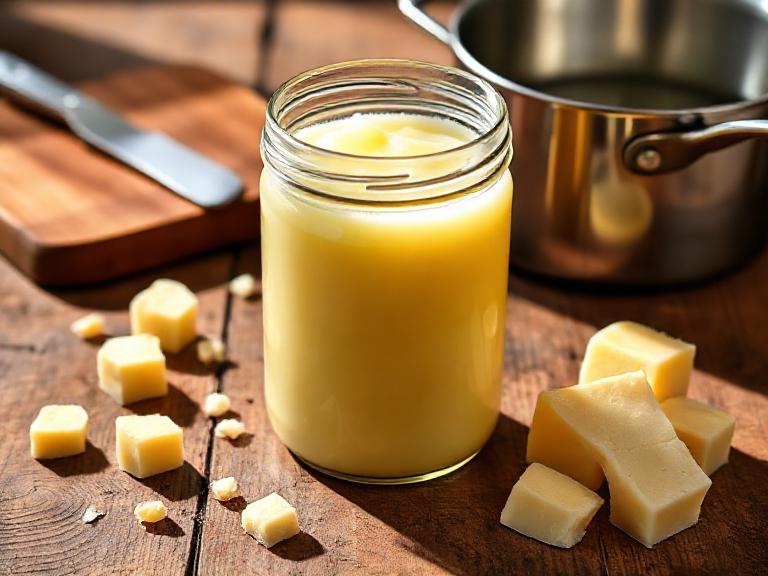
The rich, savory flavor of beef tallow pairs beautifully with a wide range of foods. For the ultimate classic experience, use it to make French fries or pan-fried potatoes; the high smoke point creates an unbelievably crispy exterior while the fat adds a deep, meaty flavor that is simply unforgettable . It’s also phenomenal for searing steaks or roasting vegetables like Brussels sprouts, carrots, and mushrooms, giving them a gorgeous, savory depth . For a real treat, try using it in place of butter or oil in your pie crusts for a flaky, flavorful base perfect for a savory beef pot pie . Since tallow creates such rich and satisfying dishes, serve them with light, fresh sides like a simple green salad with a sharp vinaigrette to cut through the richness.
Top Tips for Perfecting Beef Tallow
- Prioritize Low Heat: This is the most important rule for rendering tallow. Cooking over low heat ensures your finished tallow is pure white with a mild, pleasant flavor. Burnt tallow will be discolored and have a stronger, less desirable taste .
- Start with Quality Fat: For the best results, use fat from grass-fed cows. Some experts suggest that grass-fed tallow contains more vitamins and beneficial fats . Always smell the fat before you begin; it should have a fresh, clean, mildly beefy scent. If it smells off or has white spots (which could be mold), discard it .
- Use a Slow Cooker for Ease: A slow cooker is an excellent tool for rendering tallow because it provides consistent, low, indirect heat that greatly reduces the risk of burning, making the process almost foolproof .
- Keep Water Out: Avoid adding water to the rendering process unless specifically following a “wet” method. Any water left in the finished tallow can reduce its shelf life and cause it to sputter when you use it for high-heat cooking.
- Save the Cracklings: Don’t throw away the crispy brown bits left after straining! These are a tasty cook’s treat. Sprinkle them with salt and enjoy as a snack, or use them as a flavorful garnish for salads or baked potatoes.
Storing and Reheating Tips
Storing: One of the best properties of properly rendered tallow is its long shelf life. Store your sealed jars of tallow in a cool, dark place like a pantry, and it will remain fresh for up to a year . You can also refrigerate it, which will extend its life and keep it firm. Tallow stored in the fridge will typically stay in perfect condition for over a year .
Freezing for Long-Term Storage: For even longer storage, freezing is a great option. Pour the rendered tallow into your airtight containers, leaving a little space for expansion, and freeze. Frozen beef tallow can last for one to three years . This is perfect for making large batches.
Thawing and Reusing:
- Thawing: The best way to thaw frozen tallow is to move a jar from the freezer to the refrigerator and let it thaw overnight. Avoid thawing it at room temperature or in the microwave, as rapid temperature changes can encourage bacterial growth and spoil the texture .
- Reusing for Frying: Beef tallow is excellent for frying and can be reused. After frying, allow the tallow to cool, then strain it through a cheesecloth or fine sieve back into a jar to remove any food particles. Store it in the refrigerator and use it for another round of frying within a few months.



[…] there any dish more impressive, more celebratory, or more downright delicious than a perfect Beef Wellington? Imagine cutting through a crisp, golden-brown, buttery pastry to reveal a layer of savory […]